By the time fall rolls around, most people want their home to feel warmer and more welcoming, but they don't want to deal with the cost, mess, or commitment of a full remodel. The good news is that you don't need one. Some of the most satisfying seasonal updates come from working with what you already have, fixing what's been quietly bothering you, and making a few well-chosen additions that actually change how the space feels.
This guide is built around impact first, not a random checklist of seasonal decor ideas. The best fall updates improve mood, comfort, function, and polish all at once, and many of them cost nothing at all. Fall design trends continue to favor layered texture, warmer tones, wallpaper, and rooms that feel personal rather than staged, which makes this season especially well-suited to low-cost changes that still look intentional.
The sections ahead move in a logical order, starting with free layout resets and quick fixes, then moving into cozy styling, visual updates, guest-ready finishing touches, and finally a budget-based framework so you can prioritize based on your real constraints.
Start With the Living Room and Rework What You Already Have
The living room is the right place to start because it delivers the biggest visible and emotional payoff, especially if you only have the time or energy to focus on one space. Before you spend anything, rearrange the furniture. A layout change can make a room feel completely different without moving a single dollar out of your wallet.
Most living rooms default to furniture pushed against the walls, which actually makes a space feel less cozy, not more. Pulling pieces a few inches forward, angling a chair toward the sofa, or creating a tighter seating cluster makes conversation easier and gives the room a more intentional feel. If the space feels heavy or crowded, try removing one bulky piece entirely. A room with breathing room often feels more comfortable than one packed with furniture.
Borrowing from other rooms is another move that gets overlooked. A lamp from the bedroom, a side table from the hallway, or a basket from the laundry room can fill a gap in the living room without spending anything. The goal is to look at what you already own with fresh eyes before deciding what's missing.
A better layout also makes the room more functional for fall specifically, when people tend to gather indoors more often. A seating arrangement that faces a fireplace or creates a natural conversation area works much better for a cozy evening in than one that points everything toward a TV screen.
Getting the layout right first also helps you avoid wasting money on decor that ends up hiding a room's real problems. Once the furniture is in the right place, it becomes much easier to see what the space actually needs next.
Fix the Small Problems That Make a Room Feel Unfinished
Dead lightbulbs, visible cords, scuffed baseboards, loose cabinet hardware, and dusty ceiling fan blades are the kinds of things that quietly drain a room of its appeal. You stop seeing them after a while, but they register every time you walk in, and they make even a well-decorated room feel a little off.
Fixing these small annoyances has a disproportionate effect on how polished a space feels. Replacing a burned-out bulb, tightening a wobbly drawer pull, or patching a scuff on the wall takes less than ten minutes each but removes a layer of visual noise that was subtly competing with everything else in the room. Minor repairs and targeted cleaning can shift the feel of a space just as effectively as new decor, because they clear the way for everything else to show up better.
Some practical areas worth addressing before adding anything new to a room include:
- Vacuuming upholstered furniture, including the sides and back cushions, to remove dust and pet hair that accumulates over time
- Wiping down mirrors and glass surfaces, which tend to collect fingerprints and smudges that dull the light in a room
- Clearing flat surfaces like coffee tables and entryway consoles, since clutter on horizontal surfaces is one of the fastest ways to make a room feel chaotic
- Checking hinges on doors and cabinet doors, since a squeaky or stiff hinge is a small thing that creates an outsized sense of wear
There's also a practical health angle here. As the weather cools and windows stay closed more often, indoor air quality becomes more relevant. Dusting ceiling fans, cleaning upholstered surfaces, and removing clutter that collects dust all contribute to a cleaner indoor environment during the months when people spend the most time inside.
A polished room almost always starts with subtraction and repair rather than addition. Getting the basics right first means that whatever you add later, whether that's a new throw or a piece of art, actually gets noticed instead of disappearing into background noise.
Build Fall Comfort With Texture and Better Lighting
Texture and lighting are the two upgrades that create the strongest cozy effect without making a home feel cluttered or over-decorated. They work together in a way that other seasonal updates don't, and both can be done on a relatively small budget.
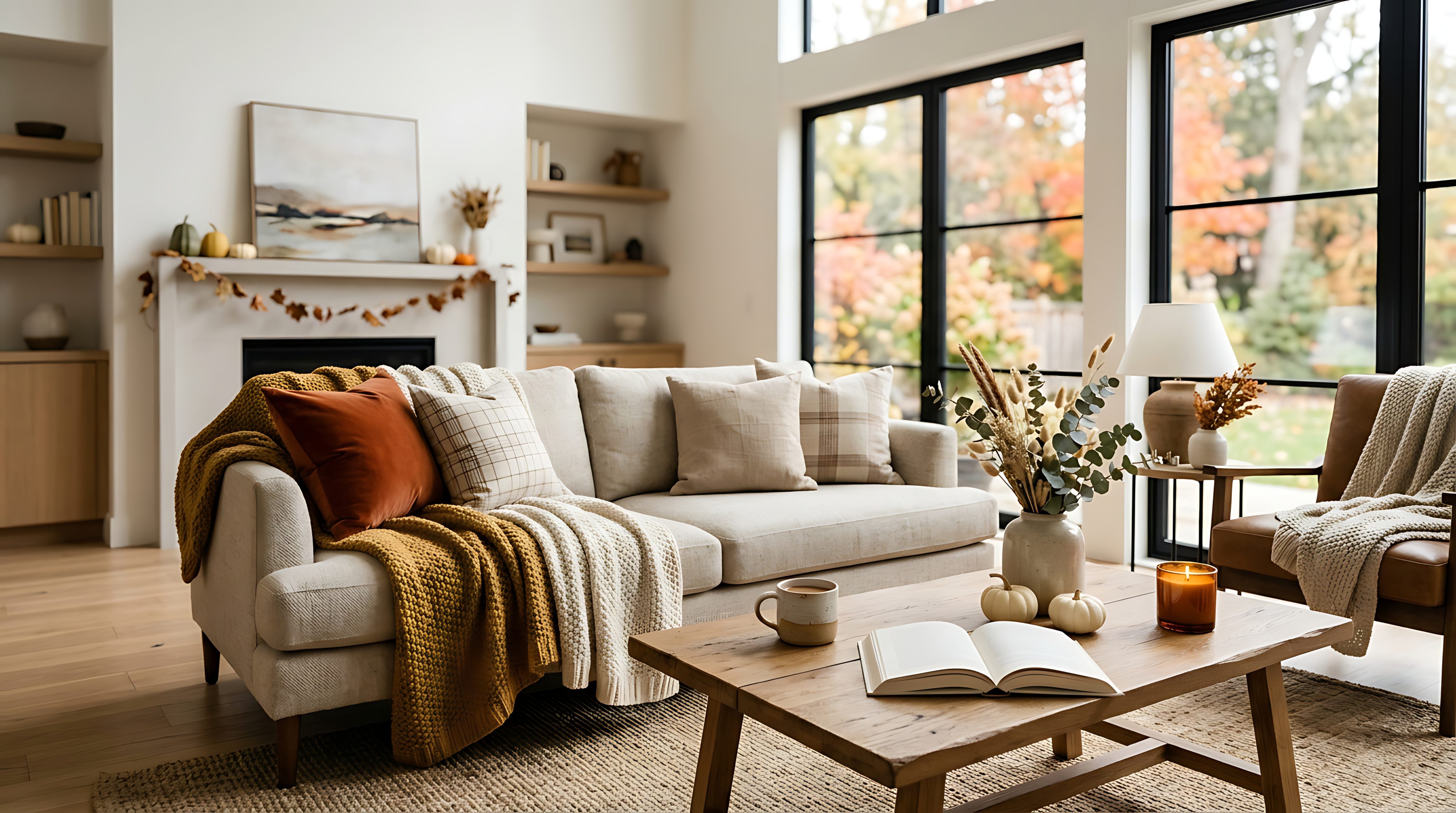
On the texture side, the goal isn't to add a lot, it's to add the right things in the right places. A knit throw draped over the arm of a sofa, a set of velvet or nubby pillow covers, a woven basket near the fireplace, or a table runner on the dining table all add tactile warmth without taking over the room. The key is to focus on surfaces you actually use rather than decorating for the sake of filling space. A cozy throw on the sofa gets touched every day. A decorative pumpkin on a shelf does not.
Lighting makes an even bigger difference than most people expect, particularly in the evening hours when fall days get shorter. A room lit only by overhead fixtures tends to feel flat and a little harsh. Layering in a table lamp, a floor lamp, or a soft accent light changes the entire atmosphere. For the warmest evening feel, bulbs in the 2700K to 3000K color temperature range work best. They cast a soft, amber-toned light that reads as warm and relaxed rather than bright and clinical.
Switching to warm ENERGY STAR certified LED bulbs is worth doing for practical reasons too. They use significantly less energy than incandescent bulbs and last much longer, which means lower electricity bills and fewer replacements over the course of the season. Here's a simple way to think about budget tiers for this section:
- Under $30 - swap pillow covers, add one warm-toned throw, replace bulbs with warm LEDs
- $30 to $75 - add a woven basket or textured table runner, pick up a small accent lamp from a thrift store or discount retailer
- $75 to $150 - invest in a quality throw blanket, a set of linen or velvet pillow covers, and a plug-in floor lamp for a corner that currently has no light source
Combining even two or three of these changes in the same room creates a noticeably different feel by the time evening comes around.
Change the Look of the Room Without Changing the Room
Once a room feels comfortable and well-maintained, the next step is shifting its visual mood. Swapping out artwork is one of the most underrated ways to do this. A print or painting with cooler tones and bright colors reads as summery, while pieces with deeper, moodier palettes feel grounded and seasonal. You don't need to buy new art every fall. Rotating pieces from other rooms or reframing something you already own in a warmer-toned frame can be enough to shift the energy of a wall.
Fall-friendly tones worth working with right now include khaki, camel, rust, terracotta, olive, mushroom, and warm brown. These colors show up well in textiles, art, and small decorative accents, and they tend to layer together naturally without requiring a lot of coordination. Choosing one or two of these tones as a thread through a room creates cohesion without making the space feel theme-heavy.
Wallpaper is worth considering if you want a bigger visual change without committing to a full room renovation. The key is using it in small doses. A powder room, an entry wall, the back panel of a bookshelf, a breakfast nook, or a single bedroom accent wall are all manageable places to add wallpaper without it becoming an overwhelming project. Peel-and-stick options are the most practical choice for budget-conscious updates and rental spaces, though walls with texture or imperfections may need some prep work before the paper goes up smoothly.
The broader strategy here is to choose one strong focal point rather than spreading small purchases across the whole room. A single piece of art that anchors the sofa wall, or a wallpapered entry that sets the tone the moment someone walks in, does more for a room than ten small accents scattered around without intention. Scattering purchases tends to create visual busyness rather than the warm, grounded feeling most people are after in fall.
Use Guests as Motivation to Finish the Refresh
Setting a real date for a casual gathering is one of the most effective ways to move from planning to actually finishing a home refresh. When a specific event is on the calendar, the decisions get easier because you're working toward something concrete rather than chasing a vague idea of "done."
The event doesn't need to be elaborate. A coffee morning with neighbors, a football watch party, a book club night, or a simple fall dinner all work well. Low-pressure gatherings are actually better for this purpose because they keep the focus on hospitality rather than perfection. The goal is a home that feels warm and ready, not one that looks like a magazine shoot.
When preparing for guests, it helps to think about what people actually notice when they first arrive. That tends to be a short list:
- The entryway, specifically whether it feels welcoming or cluttered
- The lighting, since a dimly lit or harshly lit room immediately affects how comfortable people feel
- Seating, whether there's enough of it and whether it looks inviting
- Surfaces, particularly the coffee table and dining table, which tend to attract clutter
- One or two small details that signal care, like fresh flowers, a candle, or a folded throw on the sofa
A home that looks lived-in, cared for, and genuinely ready for people is more inviting than one that feels overly staged. Guests notice warmth and ease more than they notice whether your throw pillows match perfectly. Getting the basics right and then relaxing about the rest is the most practical approach.
Using a gathering as a deadline also helps with one of the most common obstacles in any home refresh, which is the tendency to keep adding things to the list without finishing what's already started. A real date creates a natural stopping point.
Choose the Right Fall Refresh for Your Time and Budget
Not everyone has the same amount of time, money, or energy to put into a seasonal refresh, and the best approach is one that fits your real constraints rather than an idealized version of them. A clear decision framework makes it easier to act without second-guessing every choice.
For a no-spend refresh, the most impactful moves are rearranging furniture, swapping decor between rooms, decluttering flat surfaces, deep cleaning upholstered pieces, and fixing small maintenance issues like loose hardware or burned-out bulbs. These changes cost nothing and often make a bigger difference than people expect, simply because they remove what's been quietly making the space feel tired.
For the coziest result within a modest budget, texture and lighting are where to focus. A new throw, a set of warmer pillow covers, and a few warm LED bulbs will change how a room feels in the evening more than almost any other combination of updates at the same price point.
For the biggest visual change, a single piece of new art, a small wallpaper project in a powder room or entryway, or a stronger focal point in the living room will shift the look of a space more dramatically than adding lots of small seasonal accents. One well-chosen change beats ten scattered ones every time.
For fast guest prep specifically, concentrate on the spaces visitors move through first, the living room, entryway, powder room, and dining area. Getting those four areas clean, well-lit, and comfortable covers the majority of what guests will actually experience during a visit.
Two or three smart, well-placed changes almost always create a better result than attempting a full seasonal overhaul. The rooms that feel the best at the end of a refresh are the ones that got a few things done really well, not the ones where everything was touched but nothing was finished.
Final Thoughts
A fall home refresh doesn't require remodeling, a big budget, or a full redecorating project. The best order of operations is straightforward, start with layout, then fix visible issues, then add comfort through texture and lighting, then update the visual mood with art, color, or wallpaper. Following that sequence means each step builds on the one before it, so the changes feel cumulative rather than random.
The most successful refreshes feel warmer, softer, cleaner, and more intentional rather than more crowded. Adding things is rarely the answer on its own. The rooms that feel genuinely good to be in tend to be the ones where the right things were kept, the right things were fixed, and a few well-chosen additions did the rest.
Starting with the living room and building from there keeps the process manageable. Once one room feels right, it becomes much easier to carry that same thinking into the rest of the house without starting over from scratch each time. Even a handful of thoughtful changes, done well and in the right order, can make everyday life feel calmer, cozier, and more welcoming all season long.
Check out this article next